

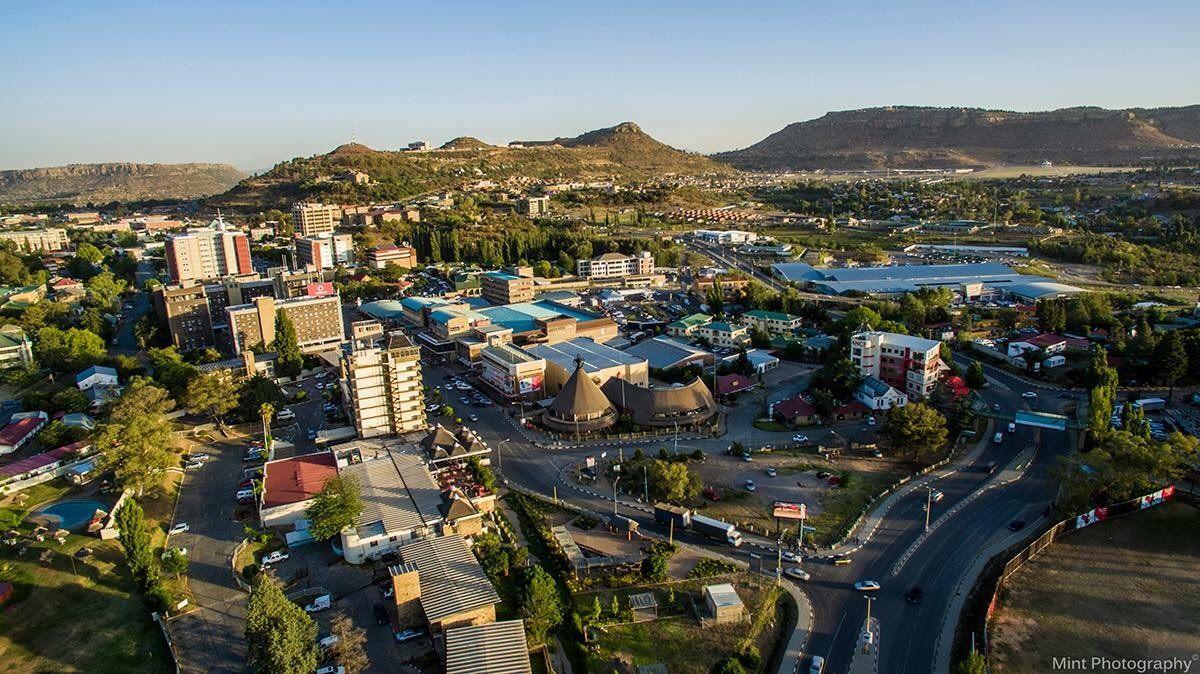
Lesotho’s economy is built around textile and garment manufacturing, diamond mining, water resources, agriculture and services. The country exports clothing and other manufactured goods, diamonds, wool and mohair, while water transfers to neighbouring South Africa generate an important source of revenue.
However, economic activity does not always create enough jobs. Lesotho’s 2024 Labour Force Survey estimated unemployment at 30.1%, highlighting the challenge of turning economic resources and export earnings into widespread employment.
As of 25 October 2026, the latest available evidence points to an economy with opportunities in manufacturing, services, agriculture and regional trade, but one that remains vulnerable to external demand, fiscal pressures and limited private-sector job creation.
Key Facts About Lesotho’s Economy
- Main industries: Textiles and clothing, mining, agriculture, construction and services.
- Main exports: Garments, diamonds, water, wool and mohair, alongside other manufactured and agricultural products.
- Important trading partner: South Africa, which surrounds Lesotho and is closely connected to its economy.
- GDP growth: The World Bank reports growth of 2.0% in 2025. Lesotho’s Bureau of Statistics reported year-on-year growth of 2.8% in the first quarter of 2026.
- Unemployment: 30.1% in the 2024 Labour Force Survey.
- Informal employment: 84.0% in the 2024 Labour Force Survey.
- Major economic challenge: Creating enough productive, sustainable jobs while diversifying exports and strengthening the private sector.
Sources: World Bank, Lesotho Bureau of Statistics and Lesotho National Development Corporation.
Table of Contents
- How does Lesotho’s economy work?
- What are the main industries in Lesotho?
- What does Lesotho export?
- Why is South Africa important to Lesotho’s economy?
- Employment and unemployment in Lesotho
- Why economic growth does not always create enough jobs
- The role of agriculture and livestock
- Water resources and the Lesotho Highlands Water Project
- Tourism and emerging business opportunities
- Challenges facing the Lesotho economy
- What could strengthen Lesotho’s economy?
- Frequently asked questions
1. How Does Lesotho’s Economy Work?
Lesotho is a landlocked country in Southern Africa, entirely surrounded by South Africa. Its economy combines export-oriented manufacturing, mining, agriculture, services and revenue associated with water transfers and regional economic arrangements.
The country also belongs to the Southern African Customs Union (SACU), which connects it to a regional trade system involving South Africa, Botswana, Namibia and Eswatini.
Lesotho’s economic performance is influenced by several external factors:
- Demand for clothing and manufactured goods in international markets.
- Diamond prices and production conditions.
- Economic activity in South Africa.
- Revenue from SACU and water-related arrangements.
- Household income from employment and remittances.
- Government spending, investment and infrastructure projects.
The World Bank identifies dependence on SACU revenue, structural constraints on private-sector development and exposure to climate shocks among the country’s economic vulnerabilities.
This means that understanding Lesotho’s economy requires more than looking at its GDP. Export performance, government finances, employment and household livelihoods also matter.
2. What Are the Main Industries in Lesotho?
Lesotho has several important industries, but they differ in how they contribute to exports, government revenue and employment.
Textile and garment manufacturing
Textiles and garments are among Lesotho’s most important manufactured exports and a major source of formal private-sector employment.
Factories produce clothing such as knitted garments, T-shirts, denim products and jeans for international and regional buyers. The industry has developed through investment in manufacturing facilities and participation in international supply chains.
The Lesotho National Development Corporation reports that the sector supported approximately 31,000–34,000 jobs in 2024.
The industry is especially significant because manufacturing can employ many workers in production, quality control, logistics and related activities.
However, garment factories depend on international orders. Changes in trade preferences, tariffs, buyer demand and production costs can affect factory activity and employment.
For long-term resilience, Lesotho needs to retain existing buyers while improving productivity, developing local supply chains and finding additional markets.
Diamond mining
Diamond mining is another recognised part of Lesotho’s export economy.
The sector generates export earnings and supports activity around mines and their supply chains. Its performance, however, depends on production costs, the quality of diamonds recovered and international market conditions.
Mining should not be confused with a guaranteed source of broad employment growth. A high-value export industry can generate considerable revenue without employing as many people as a labour-intensive manufacturing sector.
Water resources and water transfers
Water is one of Lesotho’s most strategically important natural resources.
Through the Lesotho Highlands Water Project, water is transferred to South Africa under arrangements that also generate revenue for Lesotho. The project includes major dams, tunnels and related infrastructure.
Water-related projects can support construction, engineering and infrastructure activity. Once major facilities are operational, however, their direct employment needs differ from those of large manufacturing operations.
The wider economic question is how water revenue can support reliable public finances, productive investment and lasting local benefits.
Construction and infrastructure
Construction activity is linked to public investment, housing, commercial development and large infrastructure projects.
The second phase of the Lesotho Highlands Water Project is an important example of infrastructure investment with potential effects on economic activity.
The benefits depend partly on how much work goes to local businesses and workers, how much equipment and material must be imported, and whether project-related demand develops into lasting economic activity.
Services
Services include finance, retail, hospitality, transport, telecommunications, professional services and public administration.
The World Bank reported that business services, finance, hotels and restaurants, information and communication, and utilities helped drive economic growth in the first quarter of 2026.
Services therefore deserve attention alongside traditional exports. They can create opportunities for small businesses and skilled workers, although the quality, productivity and formality of jobs vary significantly.
3. What Does Lesotho Export?
Lesotho’s main export categories include clothing and garments, diamonds, water, wool and mohair, as well as other manufactured and agricultural goods.
The precise ranking and value of individual products vary by reporting period. Readers should consult official trade statistics for the latest figures rather than assume the same export mix applies every year.
| Export category | Economic importance |
|---|---|
| Clothing and garments | Manufacturing exports and factory employment |
| Diamonds | Mineral export earnings |
| Water-related transfers | Revenue from regional water arrangements |
| Wool and mohair | Livestock-linked rural livelihoods and exports |
| Agricultural products | Potential for value-added production and diversification |
| Other manufactured goods | Opportunities to broaden the industrial base |
The Lesotho National Development Corporation also identifies products such as trout, deciduous fruits, leather goods and selected industrial products among the country’s export commodities or emerging opportunities.
Who buys Lesotho’s exports?
South Africa is a major regional economic partner. The United States has also been an important destination for Lesotho’s garment exports, while other international markets buy minerals, manufactured goods and agricultural products.
The importance of each destination differs by product. A country that buys a large quantity of one export category may not be the largest buyer across every category.
For this reason, a useful export analysis should compare both the value of exports and the products being sold to each destination.
Why export diversification matters
Reliance on a small number of export industries exposes the economy to external shocks.
If garment orders fall, mines face weaker prices or agricultural production is disrupted by drought, the consequences can extend to workers, suppliers, transport businesses and government revenue.
Diversification could involve developing higher-value garment production, expanding agricultural processing, improving wool and mohair value chains, and building competitive services and tourism businesses.
The objective is not simply to export more. It is to develop a wider range of products, buyers and businesses capable of generating sustainable economic activity.
4. Why Is South Africa Important to Lesotho’s Economy?
South Africa’s importance comes from geography, trade, employment links and shared regional economic arrangements.
Lesotho is surrounded by South Africa, making its neighbour central to the movement of goods, people and services.
South Africa is also a major source of imports for Lesotho. The two countries share close economic ties through SACU and the Common Monetary Area. Lesotho’s loti is pegged at parity with the South African rand, and rand notes circulate alongside the loti.
These arrangements facilitate regional economic integration, but they also expose Lesotho to developments in the South African economy.
For example, weaker regional demand can affect businesses selling into South Africa, while employment conditions there can influence migrant workers and their families in Lesotho.
The relationship is therefore both an opportunity and a vulnerability: regional integration provides access to markets, but it also makes economic diversification important.
5. Employment and Unemployment in Lesotho
Employment is one of the most important measures of whether economic activity is improving people’s lives.
Lesotho’s 2024 Labour Force Survey estimated that 549,722 people were employed and 236,576 were unemployed within a labour force of 786,298 people. The survey reported an unemployment rate of 30.1%.
It also reported an informal employment rate of 84.0%.
These statistics point to two related challenges: many people are looking for work, while a large proportion of employment takes place in the informal economy.
Informal employment is not necessarily the same as unemployment. People may work in small businesses, household enterprises or other activities that do not meet the survey’s definition of formal employment.
Which industries provide jobs?
Employment opportunities vary by sector and location.
- Manufacturing: Garment factories and related production activities provide formal private-sector jobs.
- Public administration and public services: Government employment is an important part of the formal labour market.
- Agriculture: Farming and livestock support rural livelihoods.
- Retail and small businesses: Shops, trading activities and local services provide work across communities.
- Construction: Infrastructure and building projects create employment, although some work is temporary.
- Tourism and hospitality: Accommodation, food services, transport and visitor activities can support local enterprises.
The number of jobs in a sector is not the same as its contribution to GDP or exports. A sector may generate high-value output but employ relatively few people.
Why youth employment matters
Young people need access to productive work, practical skills and pathways into employment or entrepreneurship.
Manufacturing, digital services, tourism, agricultural processing and small-business development could all contribute, provided firms can access finance, markets and suitable infrastructure.
Training programmes alone cannot resolve unemployment if employers are not creating enough positions. Skills development needs to be connected to real demand from businesses and the public sector.
6. Why Economic Growth Does Not Always Create Enough Jobs
Economic growth measures changes in the value of goods and services produced. It does not tell us how many jobs were created, whether wages increased or whether households experienced better living standards.
Three factors help explain this distinction in Lesotho.
First, some sectors are capital-intensive. Mining and large infrastructure projects can generate significant economic output without employing as many people as labour-intensive manufacturing.
Second, external demand affects employment. Factories may reduce shifts or hiring when international buyers cut orders. A change in export demand can therefore affect household incomes even if other parts of the economy are expanding.
Third, the private sector faces structural constraints. The IMF has highlighted limited access to finance, a relatively undiversified private sector and barriers to firm growth as obstacles to job creation.
The World Bank’s first-quarter 2026 figures illustrate why sector-level analysis matters: overall output expanded by 2.8% year-on-year, but manufacturing contracted and mining remained under pressure.
The lesson is that economic policy needs to consider not only growth, but also how effectively that growth supports productive employment.
7. The Role of Agriculture and Livestock
Agriculture remains important to Lesotho’s rural economy, even though farming faces climatic and structural challenges.
Households produce crops such as maize, wheat, sorghum and pulses, while livestock contributes to rural livelihoods and the production of wool and mohair.
Agricultural activity is vulnerable to rainfall variability, drought, floods, soil degradation and other environmental pressures.
There are opportunities to improve productivity through better farming practices, water management, animal health, storage, processing and access to markets.
Value-added production is particularly relevant. Processing agricultural products locally can create additional business activity rather than relying exclusively on the sale of unprocessed goods.
However, these opportunities depend on infrastructure, investment, reliable markets and climate resilience. They should not be treated as guaranteed sources of future income.
8. Water Resources and the Lesotho Highlands Water Project
The Lesotho Highlands Water Project is one of the country’s most significant regional infrastructure programmes.
It was developed to transfer water from Lesotho’s highlands to South Africa while providing economic benefits to Lesotho, including water-related revenue and associated infrastructure.
Its economic contribution has several dimensions:
- Water-related revenue for the country.
- Construction and engineering activity during project development.
- Potential opportunities for local contractors and suppliers.
- Infrastructure that can support broader development.
Yet the scale of a project does not automatically determine its impact on household employment. The number of jobs sustained after construction, the share of contracts awarded locally and the use of local suppliers all affect how widely the benefits are distributed.
A sustainable economic strategy needs to turn resource revenue into lasting productive capacity, rather than relying on major projects alone.
9. Tourism and Emerging Business Opportunities
Lesotho’s mountain scenery, highland landscapes, cultural heritage and outdoor activities provide a foundation for tourism.
Tourism-related businesses can include accommodation, guiding, transport, restaurants, cultural experiences and locally produced goods.
The sector’s ability to generate sustainable income depends on access, infrastructure, visitor services, marketing and the ability of local businesses to participate in tourism supply chains.
Other areas with potential include:
- Agricultural processing and food products.
- Wool and mohair processing.
- Higher-value garment production.
- Leather and footwear manufacturing.
- Selected renewable-energy and infrastructure activities.
- Digital services and business-process services.
- Small businesses supplying larger manufacturers and tourism operators.
These are opportunities rather than guaranteed forecasts. Their success will depend on investment, skills, market access and a business environment that allows enterprises to grow.
10. Challenges Facing the Lesotho Economy
Dependence on external markets
Garment exports, diamonds and regional trade are exposed to conditions outside Lesotho’s control. A narrow export base increases vulnerability to changes in demand, prices and trade policy.
High unemployment and informality
The 2024 Labour Force Survey’s 30.1% unemployment rate and 84.0% informal employment rate show why employment quality and access matter alongside economic growth.
Fiscal dependence
Revenue from SACU is important to government finances. Changes in transfers can affect the resources available for public spending and investment.
Limited private-sector development
Businesses may face difficulties obtaining finance, expanding operations, accessing markets or navigating regulatory requirements. These barriers can limit hiring and productivity.
Climate vulnerability
Droughts, floods and other climate-related shocks can affect agriculture, rural livelihoods and infrastructure.
Uneven benefits from economic activity
Mining, water-related revenue and major infrastructure projects can make important contributions without automatically creating large numbers of lasting jobs. Stronger links between large projects and local suppliers can help widen the benefits.
11. What Could Strengthen Lesotho’s Economy?
Lesotho’s development prospects depend on its ability to expand productive businesses, diversify exports and improve employment opportunities.
Several areas deserve attention.
Develop more competitive manufacturing. Building local supply chains, improving productivity and accessing a broader range of markets could reduce the industry’s dependence on a narrow set of buyers.
Support small and medium-sized enterprises. Better access to finance, business services and reliable infrastructure can help firms invest, expand and employ more people.
Increase agricultural value addition. Processing and packaging agricultural products locally could create opportunities for farmers, manufacturers and distributors.
Improve links between infrastructure projects and local firms. Local procurement, skills development and supplier participation can help major projects contribute more broadly to the economy.
Strengthen skills and digital capabilities. Relevant vocational, technical and digital training can support businesses, but it must be aligned with actual employment opportunities.
Build resilient public finances. Careful management of volatile revenue sources can help the government maintain essential services and productive investment when external conditions deteriorate.
The central objective is to develop an economy in which growth is more diversified, private businesses can expand and a greater proportion of the population can access productive employment.
Conclusion
Lesotho’s economy combines garment manufacturing, diamonds, water resources, agriculture and services, with South Africa playing a central role in regional trade and economic integration.
Each sector contributes differently. Garment factories are important employers, diamonds provide export earnings, water-related arrangements support revenue, and agriculture remains significant for rural livelihoods. Services offer additional opportunities for diversification.
The main challenge is turning these economic assets into broader and more sustainable prosperity. That requires stronger private-sector development, diversified exports, productive investment and employment opportunities that extend beyond a small number of industries.
Understanding Lesotho’s economy therefore means looking beyond GDP growth to examine who earns income, which businesses create jobs and how resilient the country is to changes in external markets.
Frequently Asked Questions
1. What is the main industry in Lesotho?
Textile and garment manufacturing is one of Lesotho’s most important export industries and a major formal private-sector employer. Mining, services, agriculture and construction are also important to the economy.
2. What are Lesotho’s main exports?
Lesotho’s principal export categories include clothing and garments, diamonds, water, wool and mohair. Other manufactured and agricultural products also contribute to exports. The exact values and rankings vary by reporting period.
3. What is Lesotho’s unemployment rate?
Lesotho’s 2024 Labour Force Survey reported an unemployment rate of 30.1%. This differs from international modelled estimates because the measures use different methodologies and reference periods.
4. Why is South Africa important to Lesotho?
South Africa surrounds Lesotho and is a major trade partner, source of imports and destination for economic activity across the border. The countries are also connected through SACU and the Common Monetary Area.
5. How does Lesotho earn money from water?
Lesotho receives revenue under arrangements associated with water transfers to South Africa through the Lesotho Highlands Water Project. Construction and related infrastructure also support economic activity.
6. Does Lesotho manufacture clothes for export?
Yes. Lesotho has an established garment-manufacturing industry that produces items such as T-shirts, knitted clothing and denim products for regional and international buyers.
7. What role does agriculture play in Lesotho’s economy?
Agriculture supports rural livelihoods through crop production and livestock. Wool and mohair are also relevant export products. Droughts, floods and other climate-related risks can affect production.
8. Why can economic growth coexist with high unemployment?
Growth may be concentrated in sectors that do not employ many people directly. Capital-intensive mining and infrastructure projects can raise output without creating as many jobs as labour-intensive manufacturing or expanding small businesses.
9. What are the biggest challenges facing Lesotho’s economy?
Major challenges include high unemployment, informal employment, limited private-sector development, dependence on selected export markets and government revenue sources, and vulnerability to climate shocks.
10. Which industries could create future opportunities in Lesotho?
Potential areas include higher-value garment production, agricultural processing, wool and mohair value chains, tourism, digital services and businesses supplying larger industrial operations. These are opportunities, not guaranteed employment forecasts.
