

The enterprise software landscape across the United Kingdom is undergoing its most radical structural shift since the transition from on-premise servers to cloud computing. For two decades, Software as a Service (SaaS) has dominated British corporate IT budgets. From Customer Relationship Management (CRM) platforms to Enterprise Resource Planning (ERP) systems, businesses have relied on applications designed around human manual input, graphical dashboards, and per-seat subscription models.
However, the rapid acceleration of autonomous AI agents is directly challenging this paradigm. Rather than acting as simple co-pilots that suggest text or generate summaries, agentic AI systems operate independently—interpreting business goals, executing complex multi-step workflows, interacting with software APIs, and making real-time decisions without continuous human intervention.
This operational shift raises a critical question for British business leaders, software developers, and IT directors: Will AI agents replace software?
The short answer is that AI agents will not destroy underlying software databases, but they are actively replacing traditional user interfaces, manual business processes, and the per-seat SaaS economic model that has governed business technology for generations.
KEY FACTS
| Metric / Dimension | Overview & Business Impact |
| Primary Structural Shift | Transition from manual UI interaction to autonomous API-driven task execution. |
| UK Enterprise Adoption | Over 35% of large UK enterprises actively testing or deploying agentic workflows. |
| Key Regulatory Bodies | ICO (Data Protection/UK GDPR), CMA (Market Competition), DSIT (AI Policy). |
| Economic Impact | Shift from per-seat SaaS licensing to token- or outcome-based pricing models. |
| Primary Implementation Risks | Data governance, hallucination propagation, API security, and legacy system compatibility. |
What Has Happened? The Rise of Agentic Architecture
Traditional software requires human intervention at every stage: an employee opens an application, clicks buttons, enters data, and navigates menus to execute a task. Autonomous AI agents fundamentally alter this dynamic by shifting the operational focus from human inputs to system outcomes.
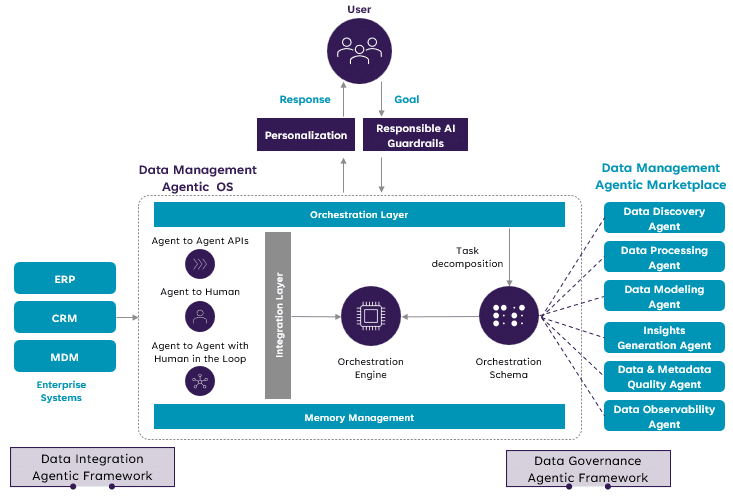
Built upon advanced Large Language Models (LLMs) and integrated directly into backend application programming interfaces (APIs), AI agents possess reasoning capabilities, short-term memory, and tool-use permissions. When assigned an enterprise objective—such as “reconcile outstanding Q3 invoices and update supplier records”—the agent breaks the task into sub-steps, queries relevant software platforms, identifies discrepancies, and executes corrective actions across multiple systems independently.
In the UK, software vendors and major enterprise providers are rushing to embed agentic frameworks directly into their suites, signaling an industry-wide recognition that static dashboard interfaces are becoming secondary interface layers.
+-----------------------------------------------------------------------+
|                       TRADITIONAL SAAS WORKFLOW                       |
|                                                                       |
|  [ Human Worker ] ---> [ UI Dashboard ] ---> [ Manual Data Entry ]    |
|                                                     |                 |
|                                                     v                 |
|                                              [ Single Database ]      |
+-----------------------------------------------------------------------+

                                  VS

+-----------------------------------------------------------------------+
|                         AGENTIC AI WORKFLOW                           |
|                                                                       |
|  [ Business Goal ] ---> [ Autonomous AI Agent ]                       |
|                                |                                      |
|            +-------------------+-------------------+                  |
|            |                   |                   |                  |
|            v                   v                   v                  |
|       [ API / CRM ]      [ API / ERP ]     [ Finance System ]         |
+-----------------------------------------------------------------------+
AI Agents vs Traditional SaaS: Core Differences
To understand whether AI agents will replace software, business leaders must distinguish between the software infrastructure (where data lives) and the software application layer (how tasks are executed).
| Feature / Dimension | Traditional SaaS Software | Autonomous AI Agents |
| User Interface | Graphical User Interfaces (GUIs), dashboards, forms | Natural language interfaces or background API execution |
| Execution Model | Human-driven; manual inputs and clicks | Autonomous; goal-oriented multi-step execution |
| Integration Method | Native integrations or custom middleware | Dynamic tool selection via REST APIs and webhooks |
| Billing & Monetisation | Per-seat/per-user monthly subscriptions | Consumption-based (tokens, API calls, completed outcomes) |
| Scalability | Tied directly to human headcount and training | Dynamic; scalable computational execution |
| Primary Bottleneck | Human speed, cognitive load, and data entry errors | Model reasoning limits, API security, and context length |
What Does It Mean for UK Businesses?
For British enterprises, the migration toward agentic systems changes three primary operational pillars: cost efficiency, workflow speed, and procurement strategy.
1. The Breakdown of Per-Seat SaaS Pricing
For years, UK technology procurement has operated on per-user license fees. A firm with 500 staff paid for 500 seat licenses across multiple software suites, regardless of individual usage depth. As AI agents execute tasks on behalf of entire teams, the necessity for individual user seats diminishes rapidly. Tech vendors are being forced to pivot toward outcome-based or usage-based pricing models, fundamentally altering corporate IT budget planning across the UK.
2. Upgrading Legacy Software Stack via API Layers
Many UK institutions—particularly in financial services, legal sectors, and public services—rely on legacy enterprise software that is expensive to replace. AI agents act as flexible orchestration layers over existing databases and legacy architectures, reading and writing data through automated APIs without requiring complete system overhauls.
3. Accelerated Operations in Professional Services
The UK economy is heavily dominated by services, including accounting, insurance, legal, and management consultancy. Agentic workflows reduce task completion times from days to minutes across document processing, regulatory compliance checks, and customer support escalation channels.
What Are the Governance and Regulatory Risks in the UK?
While the productivity potential of agentic software is significant, implementation across British enterprises carries distinct operational and regulatory risks that mandate strict compliance oversight.
                     +-----------------------------------+
                     |  UK AGENTIC AI GOVERNANCE RISK    |
                     +-----------------------------------+
                                       |
       +-------------------------------+-------------------------------+
       |                               |                               |
       v                               v                               v
[ DATA PROTECTION ]           [ MARKET COMPETITION ]        [ OPERATIONAL SAFETY ]
  ICO & UK GDPR                 CMA Oversight                 API & Access Risk
  • Automated Decisions         • Vendor Lock-In              • Cascading Errors
  • Audit Trails & DPIAs        • System Interoperability     • Unauthorised Actions
-
Data Protection & UK GDPR Compliance: Under Article 22 of UK GDPR, individuals have rights regarding automated decision-making. The Information Commissioner’s Office (ICO) emphasizes that organizations deploying autonomous agents must maintain human oversight (human-in-the-loop mechanisms) and clear audit trails when processing personal data.
-
Competition and System Lock-In: The Competition and Markets Authority (CMA) continues to monitor foundation model ecosystems. If dominant software providers restrict third-party agent access to their proprietary APIs, UK businesses risk severe vendor lock-in.
-
Cascading Operational Errors: An autonomous agent acting without proper guardrails can execute errors across multiple interconnected enterprise databases simultaneously, making robust validation layers mandatory prior to deployment.
Will AI Agents Fully Replace Business Software?
The consensus among technology analysts and enterprise architects is that AI agents will not eliminate software altogether. Instead, they are transforming how software is constructed and accessed.
Software databases, data security structures, storage solutions, and network infrastructure remain essential. However, the traditional application layer—the complex dashboards, navigation bars, and manual entry forms—will increasingly disappear behind conversational and autonomous agentic interfaces.
Software is transitioning from a set of digital tools operated by humans into an underlying engine governed and driven by autonomous AI agents.
KEY TAKEAWAYS
-
Interface Disruption: AI agents are replacing human-facing software interfaces (GUIs) with direct, autonomous API-driven workflows.
-
Database Necessity: Underlying software infrastructure, security protocols, and relational databases will remain indispensable.
-
End of Per-Seat Pricing: The classic SaaS per-seat licensing model is giving way to consumption-, token-, and outcome-based pricing frameworks.
-
UK Compliance Imperative: Deployments in the UK must adhere to ICO guidelines on automated processing, data security, and human accountability.
-
Operational Shift: UK businesses must transition IT strategy from managing individual software seat licenses to supervising autonomous agentic workflows.
FAQ SECTION
Are AI agents going to destroy the traditional SaaS industry?
No, AI agents will not destroy the SaaS industry, but they are forcing a major evolution. SaaS vendors that adapt by building API-first architectures and outcome-based pricing models will thrive, while tools relying solely on basic data entry and seat-based licensing will face obsolescence.
What is the difference between an AI agent and traditional software?
Traditional software requires a human user to manually operate the interface, enter data, and execute tasks. An AI agent is given a specific goal and autonomously plans, uses tools, calls APIs, and completes multi-step processes without step-by-step human intervention.
How do AI agents affect UK business software costs?
AI agents reduce the need for large numbers of individual software seat licenses, allowing businesses to pay for actual computational usage or completed business outcomes rather than fixed monthly user fees.
What are the main regulatory risks of using AI agents in the UK?
The primary risks involve compliance with UK GDPR and ICO rules regarding automated decision-making, ensuring data privacy, maintaining clear decision audit trails, and preventing unauthorized agent actions across enterprise systems.
Can AI agents integrate with legacy software systems?
Yes. AI agents can connect to legacy systems using REST APIs, database queries, or custom webhooks, allowing organizations to modernize workflows without replacing core underlying databases.
Will human oversight still be required when deploying AI agents?
Yes. Human-in-the-loop (HITL) oversight is critical for high-stakes business decisions, regulatory compliance, quality assurance, and preventing cascading errors caused by model hallucinations.
What industries in the UK will be impacted most by AI agents?
Professional services, finance, customer support, logistics, healthcare administration, and legal sectors will see the earliest and most profound operational impact due to their heavy reliance on multi-system data processing.
How do AI agents interact with existing software?
AI agents interact with software by utilizing Function Calling and API endpoints. They interpret data structures, choose appropriate software tools, transmit parameter payloads, and verify execution responses autonomously.
