

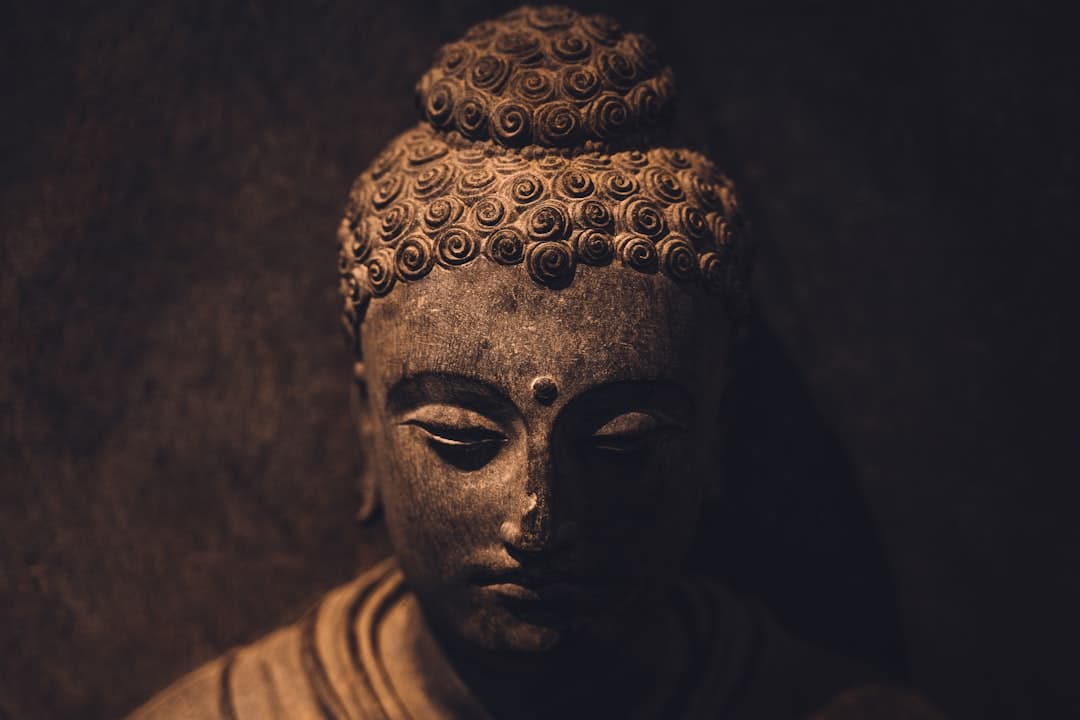
Good photos and clear product information remove a lot of doubt. Don’t just look at one beautiful main photo—also check detail shots and, if it’s listed, the size and weight. That way you can better judge in advance how the statue will really come across: shine, finish, scale, and any signs of use. That’s especially important when you’re browsing online, for example via originalbuddhas.com.
Start with what you want to feel: calm at home or a piece with history
Start with the feeling you’re looking for, because that guides your choice. If you mainly want calm in your interior, look for a serene presence: a quiet, symmetrical posture, a soft facial expression, and a surface that isn’t too busy. With good photos and a straightforward description, you’ll spot faster whether a more recent piece—or an older one with an even, balanced look—fits your space. Then you don’t get stuck on tiny details.
If you’re looking for age and character, it’s fine if time shows. Detail photos help you judge that honestly: edges that are slightly rounded rather than sharp, small pits or irregularities that aren’t identical everywhere, and areas that are locally smoother (for example on protruding parts). It also helps when the presentation makes it clear that older statues often look less crisp and less “perfect” than new ones. Then you’ll quickly feel whether you find that charming—or unsettling.
Look beyond the main photo: what to check in the details
The main photo is your first impression, but the details give you certainty. Close-ups of the face and hands show expression and wear. Photos of the underside or base make it clear how the statue stands and whether anything has been repaired. And edges and corners usually reveal small chips, cracks, or touched-up areas first.
You can also judge color and patina better with detail images. Natural aging often doesn’t look exactly the same everywhere. If you see one uniform, dark layer across the entire statue, ask for extra context or additional images. That way you’ll better understand what’s causing it—for example the material, the finish, a later layer, or a treatment.
If the size and weight are listed, you can make a practical choice right away: will it fit the spot you have in mind (shelf, windowsill, niche), and will the “presence” feel right in real life?
Provenance and dating: three questions that give you a lot of clarity
You don’t have to be a specialist, but you can ask targeted questions. A good seller can help you concretely with: where the statue comes from and what is and isn’t known, what a dating is based on (for example stylistic features, material, or visible wear), and what exactly can be seen in the posture and hand gestures—and whether that matches the description.
It’s also helpful when it’s clearly stated what is *not* certain. That separates facts from assumptions. It makes it easier for you to choose based on what matters to you: appearance, condition, size, and how much “story” you need.
Restoration and “neat”: when an alternative feels like the smarter choice
Restoration isn’t necessarily bad, but you do want to know what was done and where. Clear photos and honest explanation make the difference between neat and too polished. With older repairs, color and surface often blend in better, and you can see that in how calm the whole piece looks.
If a statue suddenly looks noticeably perfect because of additions or re-colored areas, you’ll often see it in close-ups: uniform patches, edges that look sharper than the rest, or color that catches the light slightly differently. In that case, extra photos—or a clearly presented alternative—can give you peace of mind in your choice more quickly.
At Original Buddhas, we consciously choose transparency in what you see and what you can ask about: detail, context, and a description that helps you choose at home with a good feeling. If you’re torn between character and calm, it helps when you can immediately see what imperfections are there—so you’ll know faster what you find charming and what you’d rather not see every day.
